
DESITDOWN DOCUMENTARY
THE DAY DOGO NAHAWA BLEED
Dogo NahawaVillage | Jos South LGA, Plateau State, Nigeria | March 2010 — Never Forgotten
A Desitdown Documentary Production | #Dogo Nahawa#Desitdown#NeverForget
DOCUMENTARY OVERVIEW
| Title | Dogo Nahawa: The Bloodshed Remembered |
|---|---|
|
Production
|
Desitdown Documentary
|
|
Location |
Dogo Nahawa Village, Jos South LGA, Plateau State, Nigeria
|
|
Subject |
The March 2010 Communal Massacre & Its Aftermath
|
|
Format |
On-Site Documentary — Survivor Interviews, Memorial Visit & Relief
|
|
Casualties |
Over 300 confirmed dead; thousands displaced
|
|
Cause |
Ethnic & religious tensions; land disputes between farming and herding
communities |
|
Platform |
YouTube —@Desitdown Sports
|
THE DOGO NAHAWA BLOODSHED
The Dogo Nahawa bloodshed refers to the tragic attack that occurred in March 2010 in Dogo Nahawa village, Plateau State, Nigeria. In the early hours of the morning, armed assailants invaded the community, killing men, women, and children in one of the deadliest episodes of communal violence in the region. The attack was linked to long-standing ethnic and religious tensions, as well as disputes over land ownership between farming and herding communities.
Official reports cited over 300 casualties. Thousands were forced to flee their ancestral homes, creating a massive humanitarian need for shelter and medical aid. The survivors faced deep-seated trauma, requiring years of mental health support and community reconciliation. The massacre shocked the nation and drew international condemnation, highlighting the persistent problem of insecurity and weak conflict resolution mechanisms in Nigeria.
Beyond the loss of lives, the incident left survivors displaced, traumatised, and economically devastated. The Dogo Nahawa tragedy remains a painful reminder of the consequences of unresolved communal conflicts and the urgent need for justice, reconciliation, and effective security to prevent future violence.
“The Dogo Nahawa tragedy remains a painful reminder of the consequences of
unresolved communal conflicts and the urgent need for justice,reconciliation,and
effective security.”
—Desitdown Documentary, 2025
SCENE 1—THE MEMORIAL: NAMES THAT MUST NOT BEFORGOTTEN
Desitdown’s documentary crew arrived at the memorial site erected in honour of the victims of the March 7, 2010 massacre. Engraved on the wall under the heading ‘In Loving Memory Of —Victims of 7th March 2010 Massacre at Dogo Nahawa, Plateau State’ are the names of every recorded victim men, women, and children who lost their lives that night. The sight of so many names on a single wall is a stark and haunting testament to the scale of the tragedy.
A community member guided the Desitdown crew through the memorial, pointing to names and recounting who each person was a father here, a mother there, an entire family wiped out in a single column of names. The memorial stands not just as a record of death, but as a demand for remembrance.
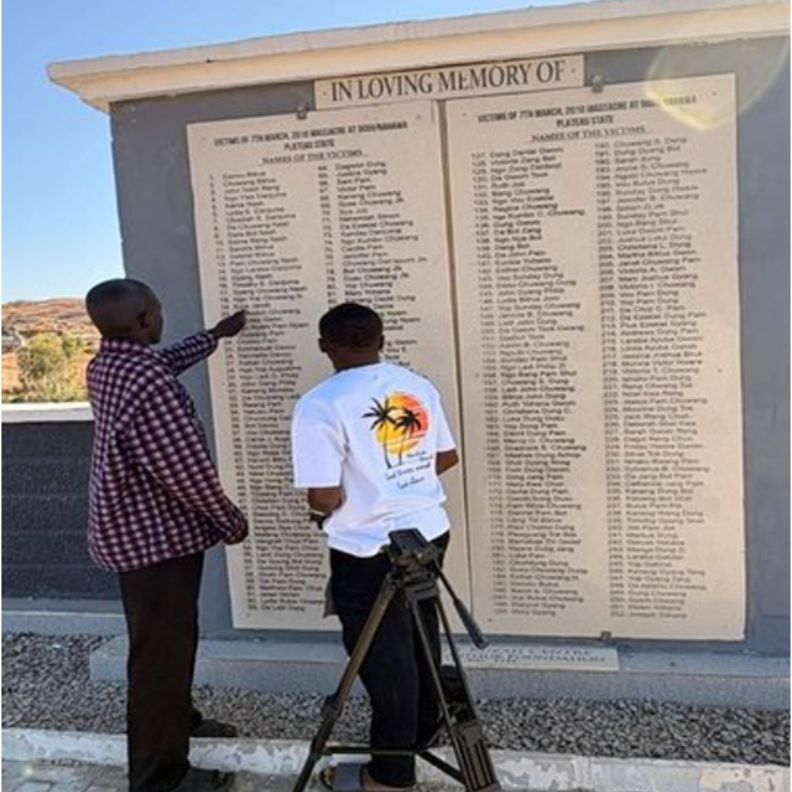
Desitdown crew at the Dogo Nahawa memorial wall — ‘In Loving Memory Of: Victims of the 7th March 2010 Massacre’ — a community member points to names of the fallen
SCENE 2—SURVIVORTESTIMONIES: VOICES FROM THE DARKNESS
At the heart of the Desitdown documentary are the survivors those who lived through the attack and carry its weight every single day. The crew conducted sit-down interviews with multiple community members, documenting their personal accounts of what happened on that terrible night and in the years that followed.
Awomanwhosurvived the massacre speaks with visible anguish her hands gesturing as she recounts the chaos, the screaming, the darkness, and the losses she cannot undo. Her testimony represents thousands of others who fled into the night with nothing and were left to rebuild their lives from rubble and grief.
A second survivor, seated and filmed on camera with the community backdrop behind him, speaks in measured words the kind of calm that comes not from peace but from years of learning to carry unbearable pain. His hands, clasped tightly in his lap during pauses, speak as loudly as his words.
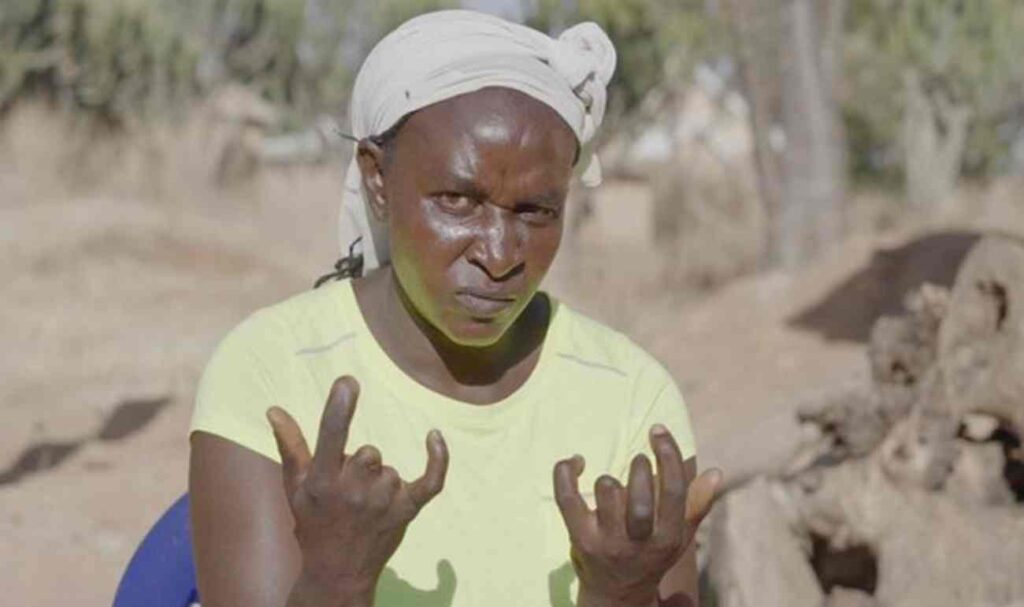
Afemale survivor recounts the night of the attack with raw emotion — her hands telling the story her words struggle to contain
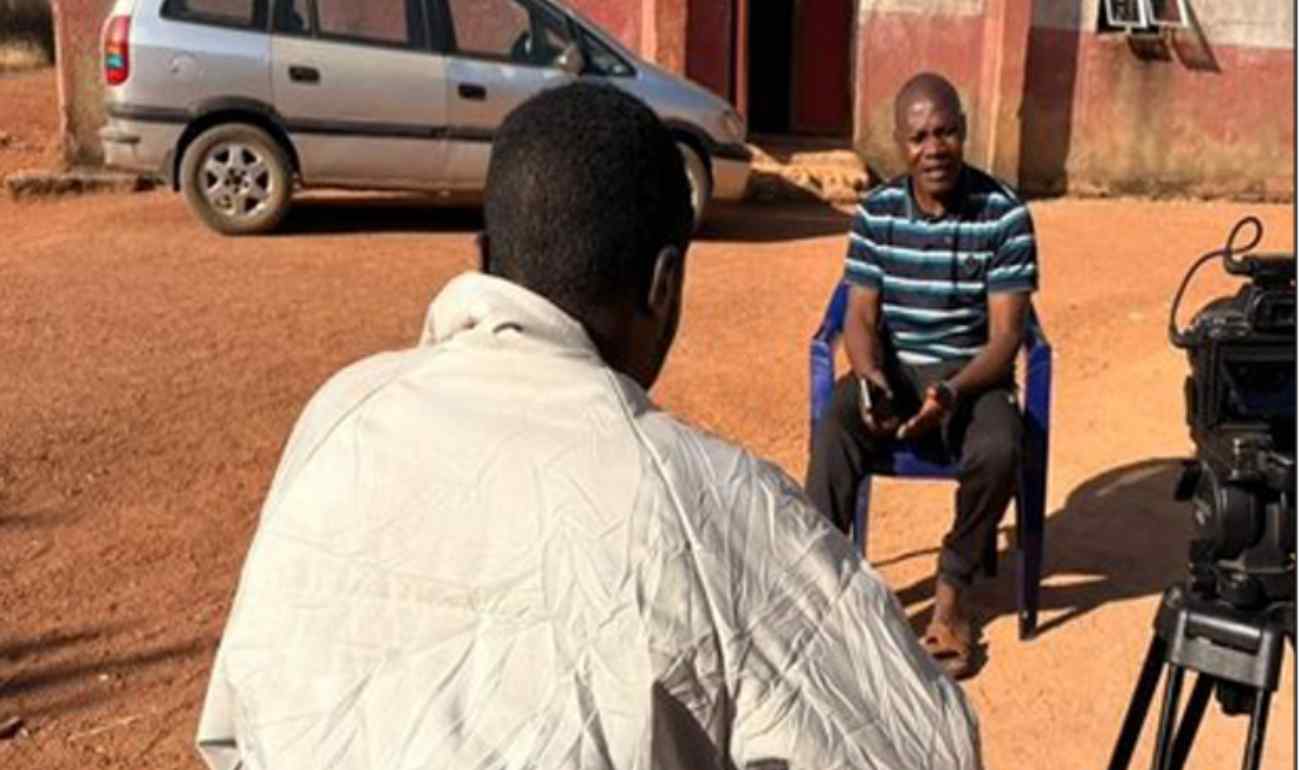
Desitdown crew filming an on-camera interview with a male survivor — the red and brown walls of Dogo Nahawa homes visible behind him
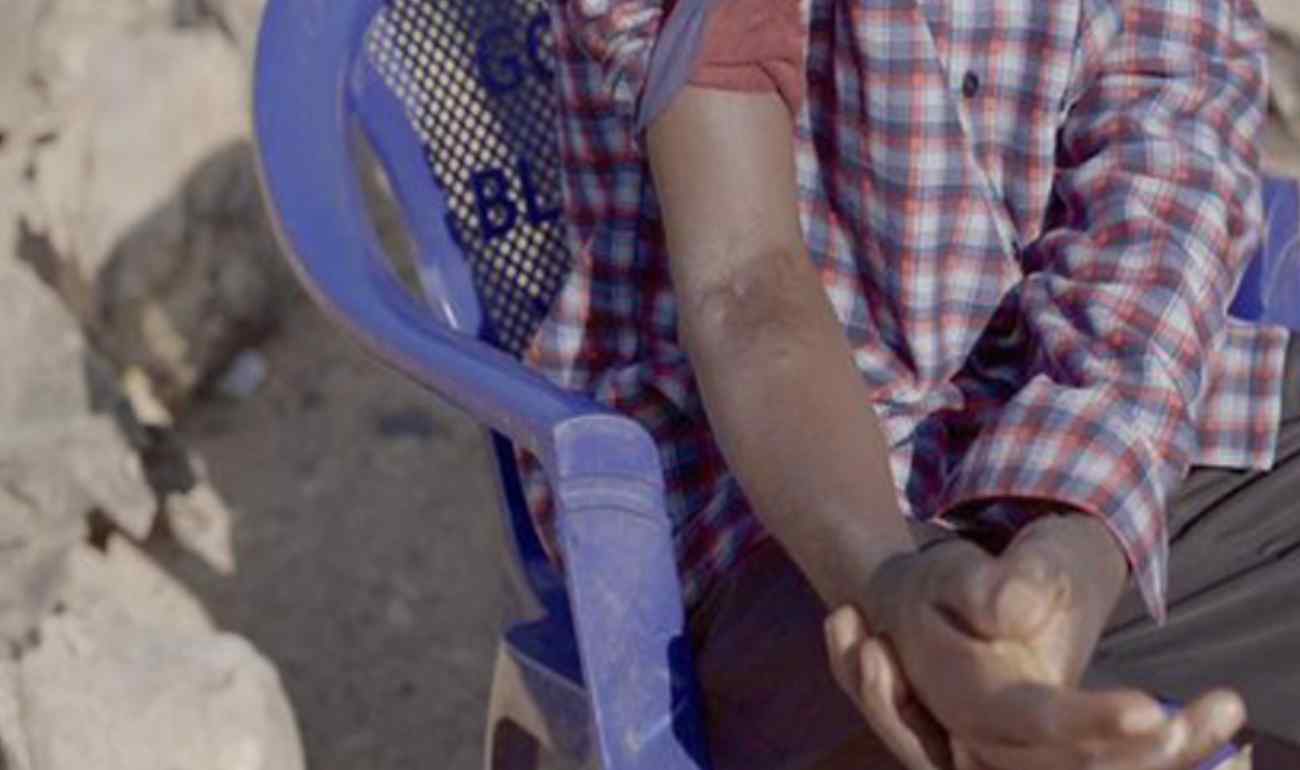
Asurvivor’s clasped hands during a pause in his testimony — a quiet image of grief and survival
SCENE 3—AT THE GRAVES: STANDING WHERE THE DEAD LIE
The documentary takes the viewer to the mass grave site where many of the victims of the 2010 massacre were buried. A survivor stands with his back to the camera, facing the graves in silence. The image requires no caption it is grief made visible. The overgrown grass pushing through the concrete slabs speaks to time passing, to a world that has moved on while those who remain have not.
The grave site, modest and partially weathered, is a solemn reminder that beneath the soil lies a community’s entire generation farmers, mothers, children, elders all taken in a single night.
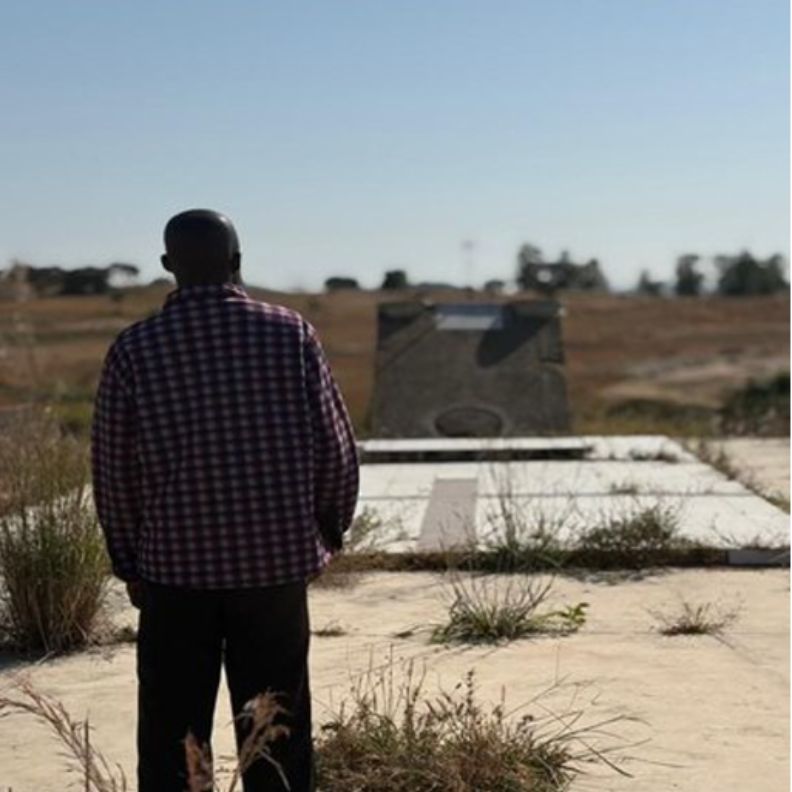
Asurvivor stands alone at the grave site of the Dogo Nahawa massacre victims — facing the memorial in silence, 15 years on
SCENE 4—RELIEF DISTRIBUTION: MORE THAN A VISIT
The Desitdown documentary visit was not only about capturing a story — it was about taking action. The production team arrived bearing food relief items, which were distributed directly to survivors and community members still living in Dogo Nahawa. Bags of rice were presented to residents, including the very survivors who had shared their testimonies on camera.
This act of solidarity underscores Desitdown’s approach to community storytelling that documenting suffering without responding to it is insufficient. The food distribution, while modest in scale, carries profound symbolic weight: that the people of Dogo Nahawa are seen, heard, and not forgotten by those with a platform to amplify their story.
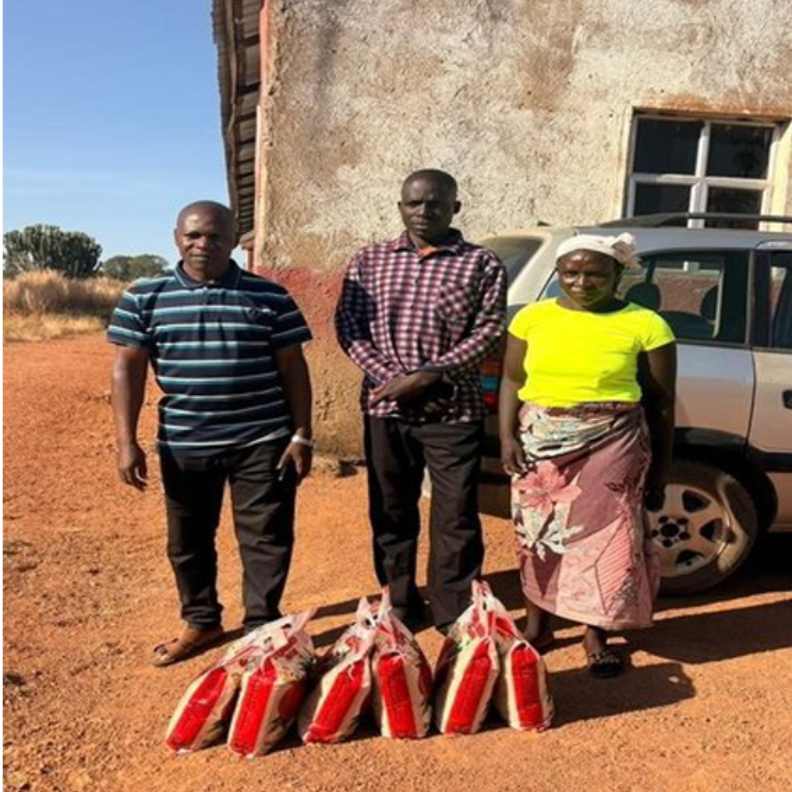
Desitdown team presents bags of rice to Dogo Nahawa survivors — a tangible act of solidarity alongside the documentary production
IMPACT & SIGNIFICANCE
The Desitdown documentary on Dogo Nahawa is more than a media production it is an act of witness. In a world where the news cycle moves fast and old tragedies are quickly buried by new ones, Desitdown chose to return to Dogo Nahawaandask: what happened here, and what became of the people who survived?
By putting cameras, microphones, and compassion in front of the survivors of one of Nigeria’s worst communal massacres, Desitdown has created a permanent record of testimony the kind that schools, governments, and future generations can return to when they need to understand what communal violence truly costs.
The documentary also positions Desitdown as more than a sports media brand. It signals a commitment to the communities of Africa the forgotten, the traumatised, and the overlooked and reflects a belief that those with platforms have a responsibility to direct them toward stories that matter.
“Those who can not remember the past are condemned to repeat it..Desitdow went to
Dogo Nahawa so that the rest of us would not forget.”
—Desitdown Documentary — Dogo Nahawa, Plateau State, 2025
Desitdown Documentary | @Official_desitdownsports | @Desitdown_Sports | Dogo Nahawa, Plateau State, Nigeria